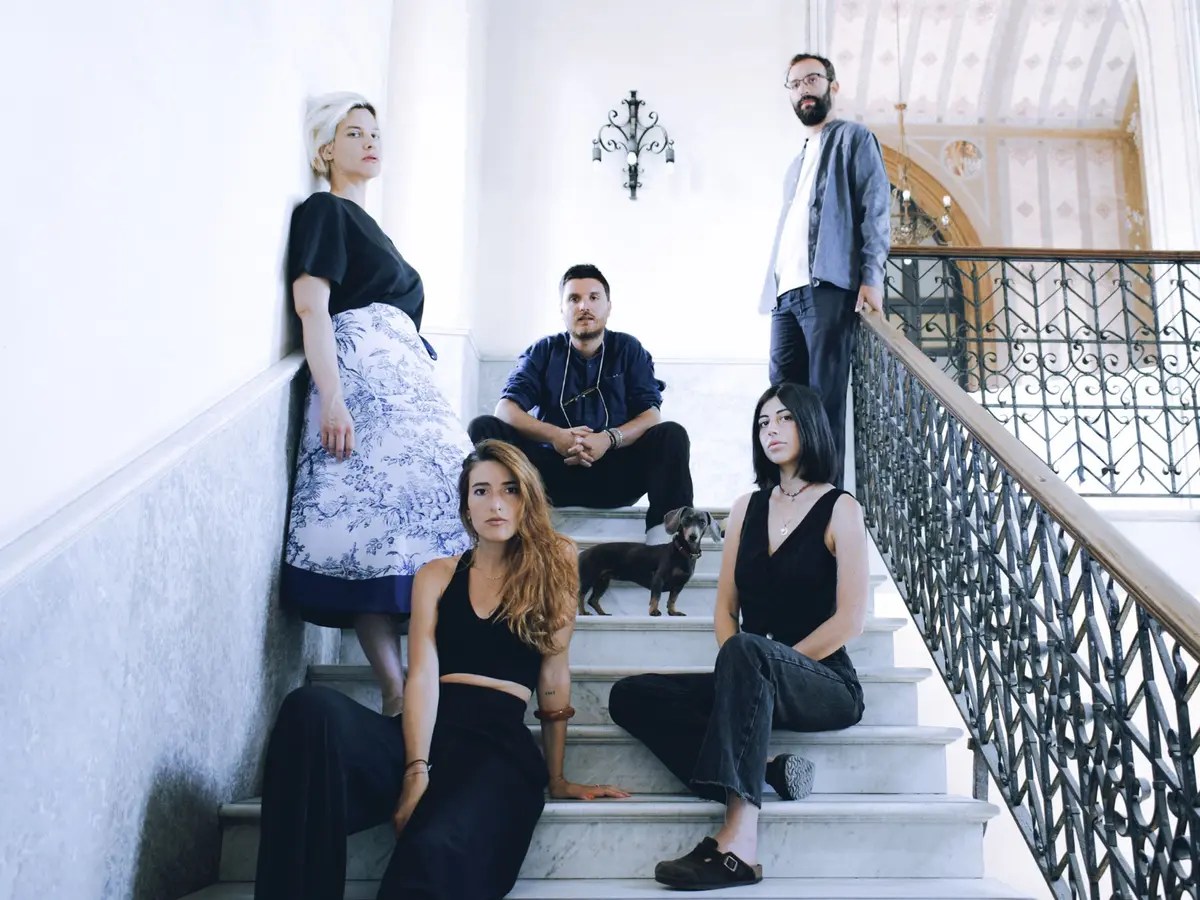
We live in an era defined not by what we build, but by what we leave behind. The contemporary human condition is caught in a strange paradox: we possess unprecedented technological tools to alter reality, yet we suffer from a profound lack of imagination regarding how to inhabit it. The projects that modern architecture and design produce are often monuments to an ongoing amnesia—a desperate attempt to maintain a status quo that has already collapsed under the weight of climate crisis, hyper-capitalism, and anthropocentric fatigue.
It is from the fracture of this paradigm that BLUE 595 is born.
BLUE 595 is not merely a platform, an archive, or a design studio. It is a critical workspace, a speculative laboratory, and an aesthetic intervention into the geography of the near future. Named after a specific coordinate of light, depth, and distance, this project looks at the world from a decentralized perspective. It asks a fundamental question: How do we design for a world that is no longer ours alone?
The Philosophy of the Blueprint
For too long, architecture has been synonymous with permanence. We have been taught to build against nature, to erect structures that isolate the human animal from the complex ecosystem it belongs to. At BLUE 595, we invert this logic. We see design as a form of “weak thought” (pensiero debole) applied to space—an architecture of transition, porousness, and cohabitation.
To design today means to understand the life cycle of materials, the political implications of a landscape, and the non-human voices that inhabit the spaces we claim. When we look at a territory, we do not see a blank canvas for human speculation; we see a dense fabric of histories, migrations, geological shifts, and biological networks. BLUE 595 operates within this fabric. Our approach is deeply rooted in environmental humanities, post-humanism, and the radical rethinking of everyday life.
Beyond the Human: Radical Coexistence
If the Anthropocene has taught us anything, it is that the central position of the human being is an illusion. The cities we have built are fragile enclaves. BLUE 595 is an attempt to map out the alternatives. Through curation, research, and spatial experimentation, we look for “zones of negotiation”—places where the artificial and the organic, the digital and the biological, can find a temporary, productive equilibrium.
This project is a call to abandon the corporate, sterile language of “sustainability”—a term that has been hijacked to justify the continuation of the same destructive practices under a greener guise. Instead, we advocate for re-enchantmentand radical adaptation. We want to explore the aesthetics of the aftermath: what happens to our spaces when we stop trying to dominate them? What does beauty look like when it is freed from the obligation of utility?
An Archive of Possibilities
BLUE 595 functions as an open archive and a collaborative hub. It gathers visions, architectural fragments, philosophical provocations, and visual essays that challenge the standard narratives of urbanism and design.
We do not offer definitive solutions because the problems of our time cannot be solved with the same mindset that created them. Instead, we offer tools for navigation. We offer a space to think about the unbuilt, the ruin, the temporary, and the marginal. It is an invitation to architects, artists, philosophers, and scientists to converge at this specific metaphorical wavelength—the blue of the deep sea, the blue of the atmosphere, the blue of the distance we must cross to reinvent ourselves.
The Horizon Ahead
BLUE 595 is a commitment to the horizon. It is an acknowledgment that while the present feels claustrophobic, the future remains unwritten. By redefining our relationship with objects, spaces, and the biosphere, we can begin to cultivate a new form of planetary citizenship.
Step inside. Observe the fragments, engage with the ideas, and help us trace the outlines of a world yet to come.